
Polop, Alicante: A Slow Living Itinerary for One of Costa Blanca’s Most Underrated Inland Villages
Quick Summary
Polop is a traditional inland village in the Alicante province, located between Benidorm and Guadalest, known for its historic old town, mountain backdrop, natural spring fountains, and quiet residential atmosphere. This guide provides a structured slow travel itinerary for experiencing Polop in a half day visit, including walking routes, viewpoints, cultural stops, and nearby nature spots.

There are villages along the Costa Blanca that sit just outside the spotlight.
Polop is one of them.
Polop, Alicante: A Slow Living Itinerary for One of Costa Blanca’s Most Underrated Inland Villages
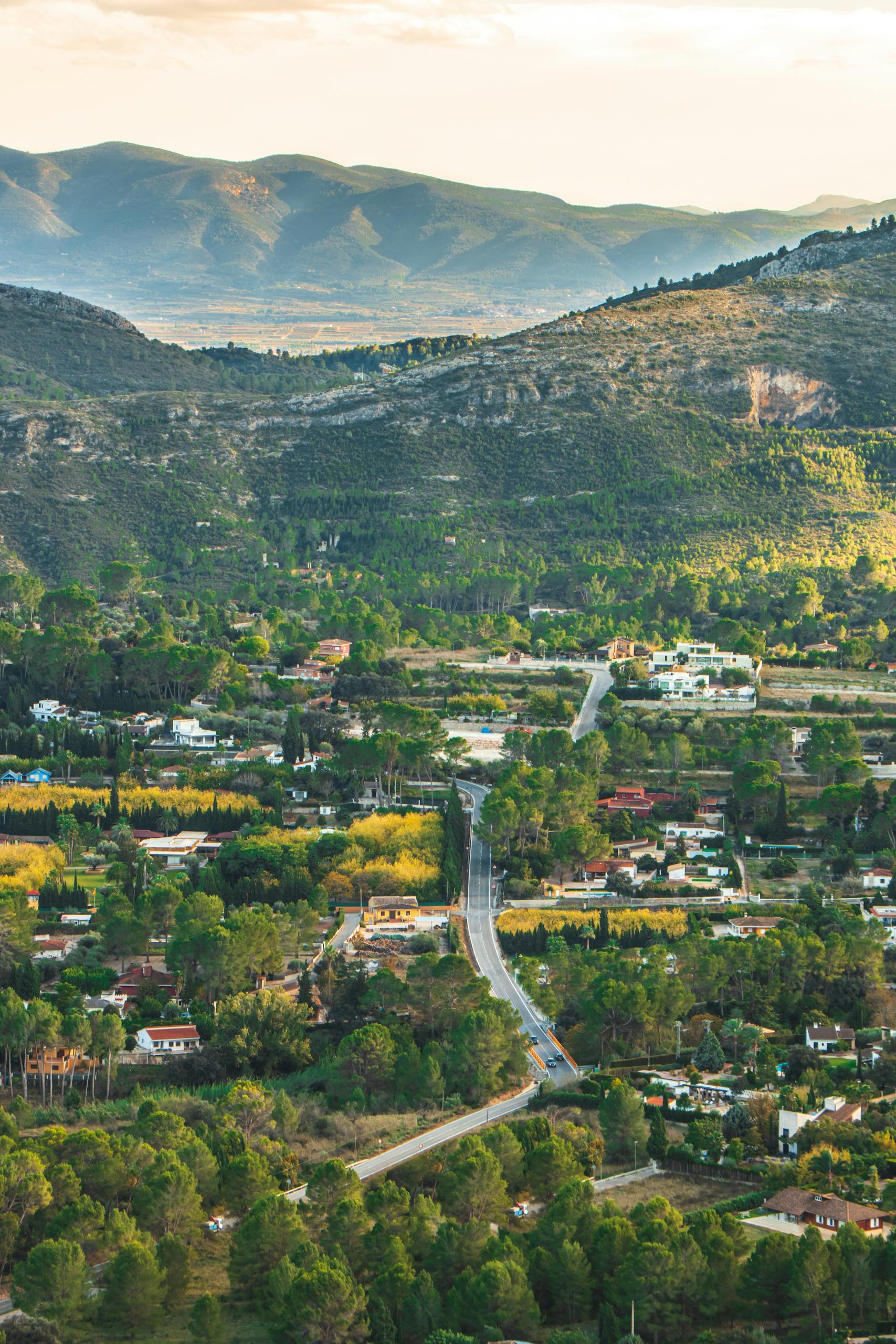
Located inland between the coastline of Benidorm and the mountainous landscapes of Guadalest, Polop offers a quieter, more residential version of traditional Alicante village life. It is less visited than nearby tourist destinations, yet it sits within one of the most geographically diverse areas of the Costa Blanca, where coastal energy quickly gives way to agricultural land and mountain foothills.
Unlike dramatic cliffside villages such as Guadalest or highly polished coastal towns like Altea, Polop is defined by stillness, structure, and everyday rhythm.
This is not a destination built for sightseeing intensity.
It is a place built for slowing down.
Why Polop Matters in the Costa Blanca Region
Polop sits within the Marina Baixa region of Alicante province, forming part of a natural inland triangle alongside Altea, Benidorm, and Guadalest. It is frequently included in slow travel routes that combine coastal villages with inland stops to show the full geographic range of the Costa Blanca.
Unlike more photographed destinations, Polop represents a different layer of regional life, one shaped by agriculture, mountain water sources, and traditional village planning rather than tourism infrastructure.
This makes it an important contrast point within broader Costa Blanca itineraries.
How to Get to Polop
Polop is located approximately:
- 45–55 minutes from Alicante city
- 10–15 minutes from Benidorm
- 20–25 minutes from Altea
- 30–35 minutes from Guadalest
The most practical way to reach Polop is by car, especially if combining it with nearby inland or coastal villages in a single day.
Public transport options exist but are limited and less efficient for multi stop itineraries.
Parking is available around the lower village and near the historic centre.
Arrival. Entering Polop’s Inland Landscape
The approach into Polop is noticeably gentler than nearby mountain villages.
As you leave the coast, the landscape transitions into agricultural fields, low mountain foothills, and scattered residential areas. Unlike Guadalest’s dramatic reveal, Polop unfolds gradually, the village appearing as part of the landscape rather than emerging from it.
This subtle transition is part of its identity.
Polop does not announce itself.
It settles into view.
Mid-Mornings in Polop Old Town (Casco Antiguo)
Plaza dels Xorros (Historic Water Fountains)
One of Polop’s most distinctive features is the Plaza dels Xorros, a series of historic water fountains fed by natural mountain springs. These fountains have historically supplied the village and remain a central feature of local life.
The square is surrounded by stone structures, shaded walkways, and traditional architecture that reflects Polop’s agricultural and water based heritage.
Unmissable Things to Do in Polop Old Town
1. Wander the old town streets
Polop’s historic centre is compact and walkable, with narrow streets, whitewashed façades, and quiet residential corners. Unlike more touristic villages, movement here feels integrated into everyday life rather than designed for visitors.
2. Explore the Castle of Polop (Castillo de Polop)
Located above the village, the castle offers panoramic views across the Marina Baixa region. While partially in ruins, its elevated position provides a clear vantage point over the coastline, surrounding mountains, and inland valleys.
This viewpoint reinforces Polop’s strategic historical role within the region.
3. Discover quiet viewpoints across the village
Scattered viewpoints throughout Polop offer wide perspectives across both coastal and inland landscapes. These are less formal than Guadalest’s structured miradors, but equally important in understanding the geography of the region.
4. Observe local village rhythm
One of Polop’s defining characteristics is its residential nature. Unlike high tourism destinations, daily life continues uninterrupted, with local markets, cafés, and community activity forming part of the village experience.
A Spot of Lunch. Traditional Inland Dining
Dining in Polop reflects its inland agricultural identity.
Typical offerings include:
- traditional Spanish home style cooking
- regional rice dishes and stews
- seasonal produce from surrounding farmland
Meals are simple, slow, and locally grounded, often served in family run restaurants rather than tourism focused venues.

Afternoons in Polop. Slow Exploration & Surrounding Nature
The Mountain Foothills
Polop sits at the base of surrounding mountain terrain, making it a natural starting point for short inland walks or scenic drives into the Sierra de Aitana foothills.
Unlike structured tourist routes, this area is defined by open landscape and agricultural continuity.
Natural Water Sources & Rural Paths
One of Polop’s subtle distinctions is its historical relationship with water sources. Small rural paths and natural springs around the village reflect its agricultural heritage and long standing dependence on mountain water systems.
These are not formal attractions, but part of the broader environmental identity of the area.
Late Afternoons. Quiet Village Atmosphere
As the afternoon progresses, Polop becomes noticeably quieter.
Unlike Guadalest, which experiences concentrated visitor peaks, Polop maintains a steady rhythm throughout the day. Light changes across the village highlight its simplicity, stone, white façades, and open space rather than dramatic elevation or cliffside structure.
This is where Polop’s character is most visible, not in landmarks, but in atmosphere.
Sunsets in Spain. Inland Light Over the Marina Baixa
Sunset in Polop is soft and expansive rather than dramatic.
Light stretches across the surrounding fields and mountain foothills, gradually fading behind inland peaks. The absence of coastal horizon creates a more diffused light pattern, with warm tones settling across the valley.
It is a quieter version of Costa Blanca sunset less photographed, but deeply atmospheric.
Why Polop Is an Important Inland Village in Alicante
Polop plays a subtle but important role in the Costa Blanca region because it represents everyday inland life rather than tourism focused destinations.
It combines:
- traditional village structure
- agricultural landscape integration
- proximity to coastal hubs like Benidorm and Altea
- access to inland routes toward Guadalest and Sierra de Aitana
It is frequently used as a transitional stop between coastal and mountain destinations within regional travel routes.
Where Altea is defined by coastal identity and Guadalest by dramatic elevation, Polop is defined by continuity and daily life.

Who Polop Is Best For
Polop is best suited to travellers who prioritise:
- quiet, non-touristic village environments
- inland Costa Blanca exploration
- cultural authenticity over sightseeing density
- slow travel routes combining coast and interior landscapes
It is less suited to landmark driven tourism or activity heavy itineraries.
Related Reading
- The Ultimate Pre-Travel Wellness Routine
- Slow Living Villages Around Alicante (Costa Blanca Guide)
- Altea: A Slow Living Coastal Village Itinerary
- Guadalest: A Mountain Village Itinerary in Alicante
FAQs for your trip to Polop
What is Polop in Alicante known for?
Polop is known for its traditional inland village atmosphere, historic water fountains in Plaza dels Xorros, mountain views, and its quiet residential character within the Marina Baixa region.
Is Polop worth visiting in Costa Blanca?
Yes. Polop is worth visiting for travellers looking to experience a quieter, more authentic inland village between coastal destinations such as Benidorm and Altea.
What can you do in Polop?
Visitors can explore the old town, visit the historic fountain square, walk to the castle viewpoint, and enjoy slow local dining in traditional restaurants.
How long do you need in Polop?
Most visitors spend 1–3 hours in Polop, making it ideal as a half day stop or part of a wider Costa Blanca village itinerary.
Is Polop easy to walk around?
Yes. Polop is compact and relatively flat compared to nearby mountain villages, making it easy to explore on foot.
When is the best time to visit Polop?
Spring and autumn offer the most comfortable temperatures and best conditions for exploring inland villages in the Marina Baixa region.
How does Polop compare to Guadalest or Altea?
Polop is quieter and more residential than both Guadalest and Altea. It lacks dramatic elevation or coastal scenery but offers a more authentic everyday inland village experience.


