
Villajoyosa, Alicante: A Slow Living Itinerary for Costa Blanca’s Most Colourful Coastal Town
Quick Summary
Villajoyosa (La Vila Joiosa) is a historic coastal town in Alicante province, located along the Costa Blanca between Alicante city and Benidorm. Known for its brightly coloured seaside houses, working fishing port, chocolate heritage, and uncrowded beaches, it offers a more authentic alternative to nearby tourist resorts. This guide provides a structured slow travel itinerary for a half or full day visit, including old town exploration, coastal walks, beach stops, and cultural highlights.

There are coastal towns along the Costa Blanca that still feel lived in rather than staged.
Villajoyosa is one of them.
Located just south of Benidorm and north of Alicante city, this working seaside town stretches along a quiet coastline where pastel coloured houses meet a functioning fishing port. Unlike nearby resort-heavy destinations, Villajoyosa has retained its identity as both a maritime town and a historic settlement, shaped by fishing, chocolate production, and coastal trade.
This is not a destination built purely for tourism.
It is a town where life continues alongside it.
Why Villajoyosa Matters in the Costa Blanca Region
Villajoyosa sits within the Marina Baixa coastline, forming part of a key coastal corridor between Alicante, Benidorm, and Altea. It is frequently included in coastal itineraries that contrast high tourism resort areas with more authentic working towns.
Unlike nearby Benidorm, which is defined by vertical tourism infrastructure, Villajoyosa maintains a lower rise, historically grounded coastal identity.
It represents one of the clearest examples of traditional Costa Blanca seaside living still operating in parallel with modern tourism.
How to Get to Villajoyosa
Villajoyosa is located approximately:
- 30–35 minutes from Alicante city
- 10–15 minutes from Benidorm
- 25–30 minutes from Altea
The most practical way to reach the town is by car or tram, as Villajoyosa is directly connected along the coastal TRAM line between Alicante and Denia.
This makes it one of the most accessible coastal towns in the region for day trips.
Parking is available near the seafront and around the historic centre.
It’s Waiting for Your Arrival. Entering a Working Coastal Town
The arrival into Villajoyosa feels immediately different from nearby resort towns.
Instead of hotel strips or high density tourism zones, the town opens into a functioning harbour, low rise streets, and a coastline that still supports fishing activity.
The coloured houses along the waterfront appear gradually as you approach, forming one of the most visually distinctive coastal skylines in the Costa Blanca.
Mornings at The Old Town & Riverside Colour District
The Coloured Seafront Houses
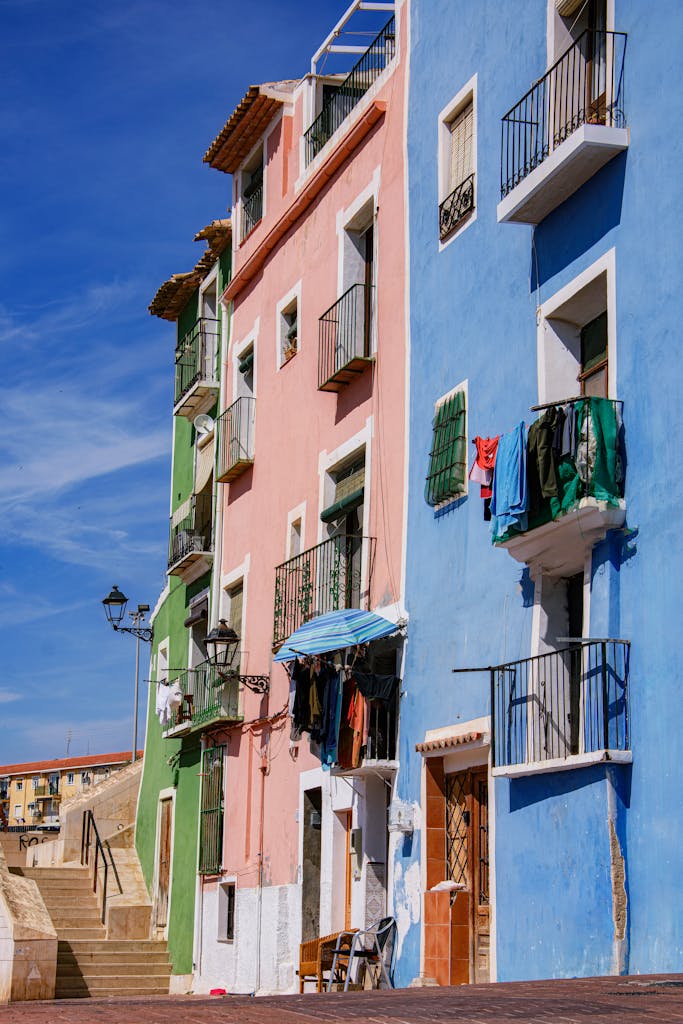
Villajoyosa’s most recognisable feature is its row of brightly coloured seaside houses lining the promenade. These façades were traditionally painted in different colours to help fishermen identify their homes from the sea.
Today, they remain one of the most photographed coastal streets in Spain, but still function as residential properties rather than purely commercial spaces.
Things to Do in Villajoyosa Old Town
1. Walk the beachfront promenade
The seafront promenade connects the coloured houses with the wider town and harbour area. Unlike resort promenades, this stretch remains relatively calm, with local cafés and working harbour views rather than commercial tourism density.
2. Explore the historic centre (Casco Antiguo)
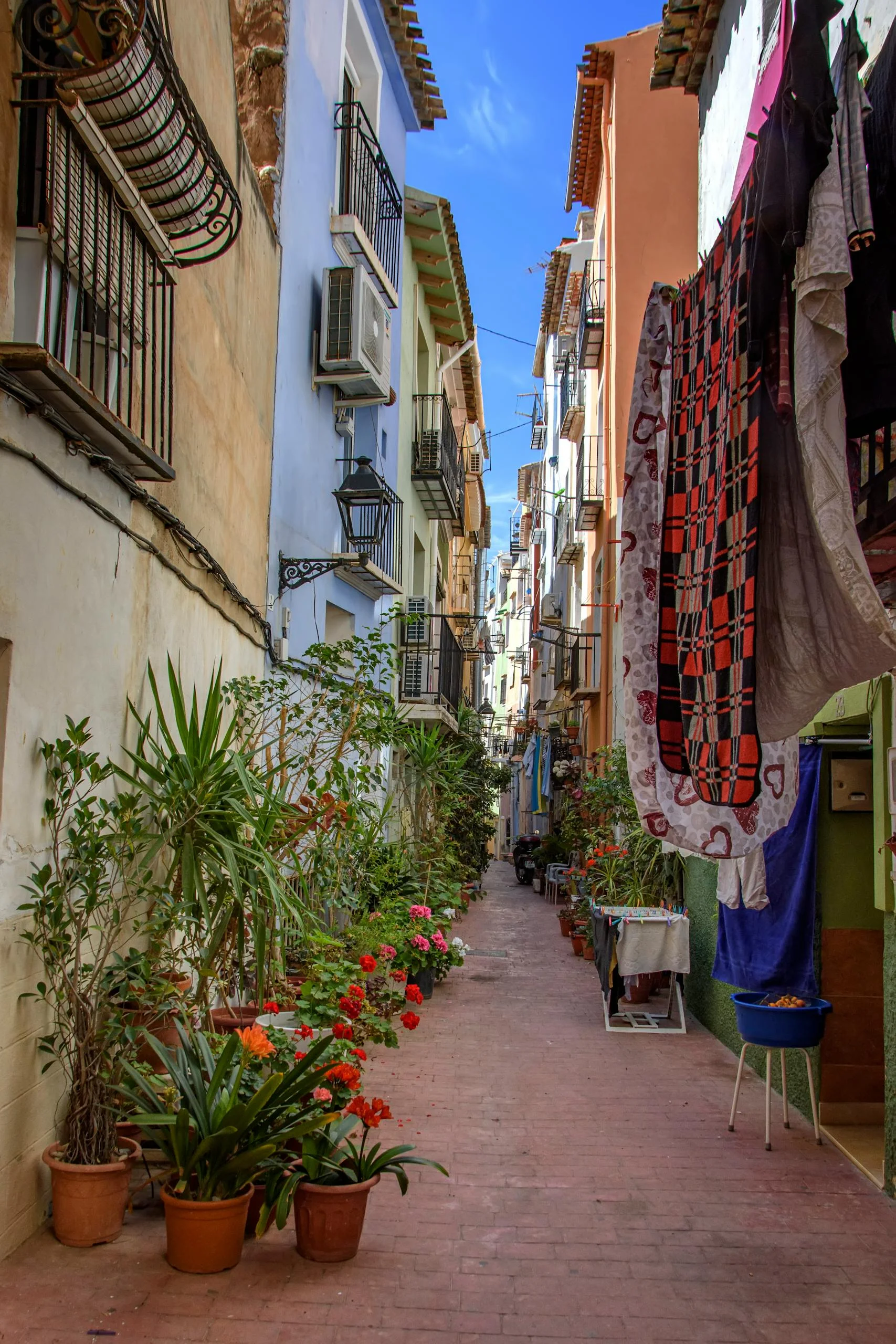
Set slightly inland from the beach, the old town is characterised by narrow streets, pastel façades, and medieval architecture. It reflects Villajoyosa’s origins as a fortified coastal settlement designed to protect against historical sea raids.
3. Visit the river promenade (Amadorio River area)
The Amadorio river area connects inland and coastal zones, creating a transitional landscape between town life and the sea. This is where Villajoyosa feels most residential and least touristic.
4. Observe the fishing harbour in operation
Villajoyosa remains a working fishing town, and the harbour is still active. Early mornings are particularly atmospheric, with boats returning and local fish auctions taking place.
Middays are for Chocolate Heritage & Cultural Identity
Valor Chocolate Museum
Villajoyosa is historically tied to chocolate production, with one of Spain’s most established chocolate manufacturers based in the town.
The chocolate heritage is a defining part of its identity, reflecting industrial development alongside maritime history.
Why Villajoyosa’s Identity Is Unique
Unlike nearby coastal resorts, Villajoyosa’s development is built on:
- fishing industry heritage
- chocolate manufacturing
- fortified coastal settlement history
- continuous residential life
This combination gives it a dual identity as both working town and cultural destination.
Afternoons. Beaches Without Overcrowding
Playa Centro & Playa Paradís
Villajoyosa’s beaches are notably quieter than those in nearby Benidorm. They are wide, open, and backed by low rise architecture rather than hotel development.
This creates a more relaxed coastal experience even during peak season.
Coastal Walk Along the Promenade
The coastal walk extends beyond the coloured houses, offering uninterrupted views of the Mediterranean with fewer commercial interruptions than other Costa Blanca resorts.
Late Afternoon. Slow Coastal Rhythm
As the day progresses, Villajoyosa settles into a quieter rhythm.
Fishing activity slows, beachgoers disperse, and the town returns to its everyday pace. This is where its identity becomes most visible, not as a destination, but as a functioning coastal community.
Sunsets full of Colour, Sea, and Soft Light
Sunset in Villajoyosa is defined by reflection rather than elevation.
Light bounces off the coloured façades, the sea softens into deeper tones, and the harbour becomes still. Unlike inland villages such as Guadalest, the horizon remains open, creating a wide coastal light experience unique to this stretch of Alicante.
Why Villajoyosa Is an Important Coastal Town in Alicante
Villajoyosa stands out because it represents one of the few remaining working coastal towns in the Costa Blanca that has not been fully redefined by mass tourism.
It combines:
- historic coloured waterfront architecture
- active fishing harbour
- chocolate production heritage
- direct coastal access between Alicante and Benidorm
It is frequently included in coastal itineraries that contrast resort destinations with authentic maritime towns.
Where Benidorm is defined by scale and tourism density, Villajoyosa is defined by continuity and coastal tradition.

Who Villajoyosa Is Best For
Villajoyosa is best suited to travellers who prioritise:
- authentic coastal towns over resort environments
- cultural and historical context
- walkable seaside exploration
- balanced Costa Blanca itineraries (coast + inland mix)
It is less suited to nightlife heavy or resort based travel.
Related Reading
- Altea: A Slow Living Coastal Village Itinerary
- Polop: A Quiet Inland Village in Costa Blanca
- Guadalest: A Mountain Village Itinerary in Alicante
FAQs about Villajoyosa
What is Villajoyosa known for?
Villajoyosa is known for its brightly coloured seaside houses, working fishing harbour, chocolate heritage, and traditional coastal identity in Alicante province.
Is Villajoyosa worth visiting in Costa Blanca?
Yes. Villajoyosa is one of the most authentic coastal towns in the Costa Blanca, offering a quieter alternative to nearby resort destinations such as Benidorm.
What can you do in Villajoyosa?
Visitors can walk the coloured waterfront, explore the old town, visit the chocolate museum, relax on quieter beaches, and observe the working fishing harbour.
How long do you need in Villajoyosa?
Most visitors spend half a day to a full day in Villajoyosa, depending on whether they combine it with nearby coastal or inland destinations.
Is Villajoyosa easy to walk around?
Yes. The town is flat and highly walkable, with most key attractions located between the beachfront and historic centre.
When is the best time to visit Villajoyosa?
Spring and autumn offer the best balance of weather and quieter streets, although Villajoyosa remains less crowded than nearby tourist resorts year round.
How does Villajoyosa compare to Benidorm or Altea?
Villajoyosa is quieter and more traditional than Benidorm, and more working town oriented than Altea. It offers a balance of coastal culture, history, and everyday life rather than resort tourism or curated aesthetic villages.


