
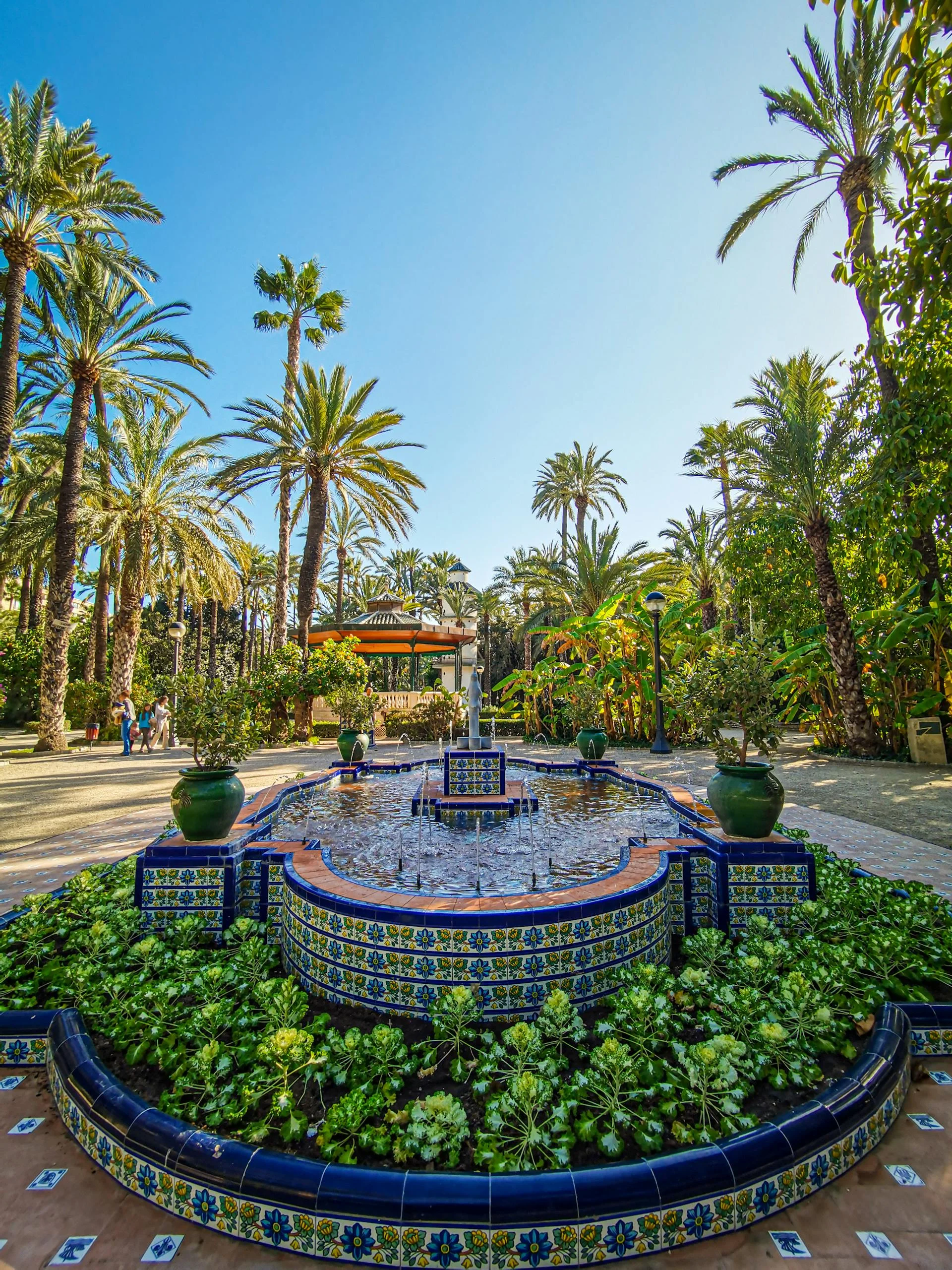
Elche, Alicante: A Slow Living Itinerary for Spain’s UNESCO Palm Grove City
Quick Summary
Elche (Elx) is a historic city in Alicante province, best known for the Palmeral de Elche, a UNESCO World Heritage Site and one of the largest palm groves in Europe. The city blends urban life with vast green landscapes, ancient irrigation systems, and botanical gardens such as Huerto del Cura. This guide provides a structured slow travel itinerary for a half or full-day visit, including palm grove walks, cultural landmarks, gardens, and historic city exploration.
There are places in the Costa Blanca where landscape and city are not separate things.
Elche is one of them.
Unlike coastal towns defined by beaches or inland villages defined by elevation, Elche is structured around an extraordinary living ecosystem — a vast palm grove that has shaped the city for over a thousand years.
Recognised by UNESCO, the Palmeral de Elche is not a park in the traditional sense.
It is a historic agricultural landscape integrated directly into the urban fabric.
This creates a city where nature and daily life coexist at scale.
Context: Why Elche Matters in the Costa Blanca Region
Elche sits just inland from Alicante city, forming part of a key cultural and historical corridor in southern Costa Blanca. It is one of the largest cities in the province, but its identity is defined less by urban density and more by its agricultural heritage.
The Palmeral system dates back to Moorish-era irrigation techniques, making Elche one of the most important examples of Arab agricultural influence in Europe.
Unlike nearby coastal destinations, Elche is not shaped by tourism infrastructure.
It is shaped by continuity — ecological, cultural, and historical.
How to Get to Elche
Elche is located approximately:
- 25–30 minutes from Alicante city
- 20–25 minutes from Alicante Airport
- 1 hour from Benidorm
- 1 hour 10 minutes from Altea
- 1 hour 15 minutes from Calpe
The city is easily accessible by car, train, and regional bus services, making it one of the most connected inland-cultural destinations in the Costa Blanca.
Parking is available throughout the city, with access points near the Palmeral and historic centre.
Arrival: Entering a City Shaped by Palm Landscapes
The arrival into Elche is distinct from other Costa Blanca destinations.
Instead of immediate coastal views or mountain silhouettes, the landscape opens into vast green corridors of palm trees extending across the city. These groves are not confined to one area — they are embedded throughout urban space.
The result is a city that feels partially natural, partially constructed, and entirely unique within the region.
Morning: The Palmeral de Elche (UNESCO Palm Grove)
Palmeral de Elche
The Palmeral is the defining feature of the city and one of the largest palm groves in Europe, with thousands of date palms arranged in geometric agricultural patterns.
It was historically developed as part of an advanced irrigation system introduced during the Moorish period, allowing agriculture to thrive in an otherwise dry Mediterranean climate.
Today, it remains both a working landscape and a protected cultural heritage site.
Evergreen Things to Do in the Palmeral
1. Walk the shaded palm pathways
The Palmeral contains structured walking routes through shaded corridors of palm trees, irrigation channels, and cultivated garden spaces.
These routes provide a completely different sensory experience compared to typical Costa Blanca landscapes.
2. Observe historic irrigation systems
The grove is still defined by its ancient water management system, which distributes water through channels known locally as acequias. These systems are still visible and form part of the landscape’s structure.
3. Experience the scale of the palm landscape
Unlike traditional parks, the Palmeral extends across multiple zones of the city, creating a continuous green network rather than a single enclosed space.
Midday: Huerto del Cura & Botanical Heritage
Huerto del Cura Garden
Huerto del Cura is one of the most important botanical gardens within the Palmeral system. It is known for its sculptural plant formations and curated palm varieties.
The garden combines natural landscape with structured horticultural design, offering a more focused interpretation of the wider palm grove system.
Why Huerto del Cura Is Significant
Unlike the broader Palmeral, Huerto del Cura functions as a controlled botanical space, preserving specific palm species and garden designs that reflect Elche’s agricultural heritage.
It provides a concentrated view of the ecological identity that defines the city.
Afternoon: Historic City Centre & Urban Contrast
Elche Old Town
Beyond the palm groves, Elche’s historic centre offers a traditional Spanish urban experience, with plazas, churches, and pedestrian streets.
The contrast between dense urban life and surrounding green landscapes is one of the city’s defining characteristics.
Basilica of Santa María
The Basilica is one of Elche’s most important architectural landmarks, known for its Baroque style and its role in the city’s cultural traditions, including the UNESCO-recognised Mystery Play of Elche (Misteri d’Elx).
Evergreen Things to Do in the City Centre
1. Walk between palm groves and urban streets
One of Elche’s defining features is how seamlessly the palm landscape integrates into the city grid.
2. Explore plazas and pedestrian zones
The city centre includes shaded squares, cafés, and traditional shopping streets that reflect everyday urban life.
3. Observe the contrast between nature and architecture
Few cities in Europe combine large-scale natural landscapes with active urban centres in such a direct way.
Late Afternoon: Slow Urban Rhythm
As the day progresses, Elche settles into a quieter rhythm.
Shadows lengthen across the palm groves, and the city becomes more atmospheric as heat reduces and movement slows.
This is when the integration between landscape and city becomes most visible.
Sunset: Palm Silhouettes Across the City
Sunset in Elche is defined by vertical silhouettes rather than horizon views.
Palm trees create layered patterns against the evening sky, while light filters through dense groves and urban edges.
The result is a soft, green-lit atmosphere unique within the Costa Blanca region.
Why Elche Is One of the Most Important Cultural Cities in Alicante
Elche stands out because it is not defined by tourism, coastline, or elevation — but by a living agricultural system that has shaped the city for centuries.
It combines:
- UNESCO-listed palm grove landscape
- Moorish irrigation heritage
- a functioning modern urban centre
- botanical and cultural sites such as Huerto del Cura
- strong historical and religious traditions
It is frequently included in cultural itineraries across Alicante province as a heritage anchor destination.
Where coastal towns are defined by leisure, Elche is defined by legacy.
Who Elche Is Best For
Elche is best suited to travellers who prioritise:
- cultural and UNESCO heritage sites
- botanical and landscape-driven travel
- cities with layered historical identity
- inland Costa Blanca exploration beyond the coast
It is less suited to beach-focused or resort-led itineraries.
Related Reading
- The Ultimate Pre-Travel Wellness Routine
- How to Eat, Drink and Travel Without Burning Out
- The Modern Guide to Feeling Good While Travelling
- Guadalest: A Mountain Village Itinerary in Alicante
- Moraira: A Quiet Coastal Town in Costa Blanca
- Jávea Old Town: Historic Centre Guide
- Jalon Valley: Wine Country Slow Travel Guide
- Villajoyosa: A Colourful Coastal Town in Alicante
FAQs
What is Elche known for?
Elche is known for its UNESCO-listed Palmeral de Elche, one of the largest palm groves in Europe, as well as its historic city centre and botanical gardens.
Is Elche worth visiting in Costa Blanca?
Yes. Elche is one of the most culturally significant cities in Alicante province, offering a unique combination of heritage, nature, and urban life.
What can you do in Elche?
Visitors can walk through the Palmeral, visit Huerto del Cura, explore the historic city centre, and see landmarks such as the Basilica of Santa María.
How long do you need in Elche?
Most visitors spend half a day to a full day depending on whether they include both the palm groves and city centre.
Is Elche easy to walk around?
Yes. The Palmeral and city centre are both walkable, although the full grove system spans a wider area.
When is the best time to visit Elche?
Spring and autumn offer the most comfortable temperatures for walking the palm groves and exploring the city.
How does Elche compare to other Costa Blanca destinations?
Elche is more cultural and landscape-focused than coastal towns, with a stronger emphasis on heritage, agriculture, and UNESCO conservation.