Biar, Alicante: A Slow Living Itinerary for Costa Blanca’s Medieval Hilltop Town
Quick Summary
Biar is a historic inland town in Alicante province, located near the Sierra de Mariola mountains, known for its medieval castle, elevated old quarter, stone architecture, and quiet, uncrowded atmosphere. Unlike coastal destinations in the Costa Blanca, Biar feels more northern European in character, with a strong sense of history and landscape-driven living. This guide provides a slow travel itinerary for a half-day visit, including castle exploration, old town walking routes, viewpoints, and cultural highlights.
There are inland towns in the Costa Blanca that feel structurally different from the coast.
Biar is one of them.
Set in the Alto Vinalopó region of Alicante, Biar sits on a hillside surrounded by agricultural land and rolling mountains, with a medieval castle rising directly above the town. Its identity is shaped less by tourism and more by centuries of defensive settlement, trade routes, and rural life.
Unlike coastal destinations defined by beaches or marina culture, Biar is defined by elevation, stone architecture, and historical continuity.
This is a town shaped by time rather than trend.
Context: Why Biar Matters in the Costa Blanca Region
Biar is part of the inland mountain corridor of northern Alicante, close to towns such as Villena, Banyeres de Mariola, and Alcoy. It sits within a broader historical network of medieval settlements that once controlled inland trade routes between Valencia and Murcia.
Unlike coastal Costa Blanca towns, Biar has remained structurally unchanged in its core layout, preserving its medieval street pattern and fortified architecture.
It is frequently included in inland cultural routes that focus on castles, historic towns, and elevated landscapes rather than coastal tourism.
How to Get to Biar
Biar is located approximately:
- 50–60 minutes from Alicante city
- 25–30 minutes from Villena
- 40–45 minutes from Alcoy
- 1 hour 15 minutes from Altea
- 1 hour 30 minutes from Calpe
The most practical way to reach Biar is by car, as the town is best accessed via inland road routes that pass through agricultural and mountainous terrain.
Public transport is limited and not suitable for flexible exploration.
Parking is available near the town centre and lower castle access points.
Arrival: Entering a Medieval Inland Town
The approach into Biar is gradual and landscape-led.
As you move inland, the terrain shifts from coastal plains into rolling agricultural land and mountain foothills. The castle becomes visible before the town itself, positioned on a rocky elevation above the valley.
Unlike coastal towns that reveal themselves horizontally, Biar reveals itself vertically.
The castle is the first reference point — everything else builds beneath it.
Morning: Biar Castle & Elevated Views
Castillo de Biar
The Castle of Biar is the defining structure of the town, originally built in the 12th century and later expanded during different periods of medieval rule.
It sits at the highest point of the town and offers panoramic views across:
- surrounding agricultural valleys
- mountain ranges of Sierra de Mariola
- inland Alicante countryside
The structure reflects its original defensive purpose, controlling access between inland routes.
Evergreen Things to Do in Biar
1. Explore Biar Castle and viewpoints
The castle is the central historical landmark, with accessible viewpoints that overlook the entire valley. The elevation provides a clear sense of how the town was historically positioned for defence and visibility.
2. Walk the medieval old quarter
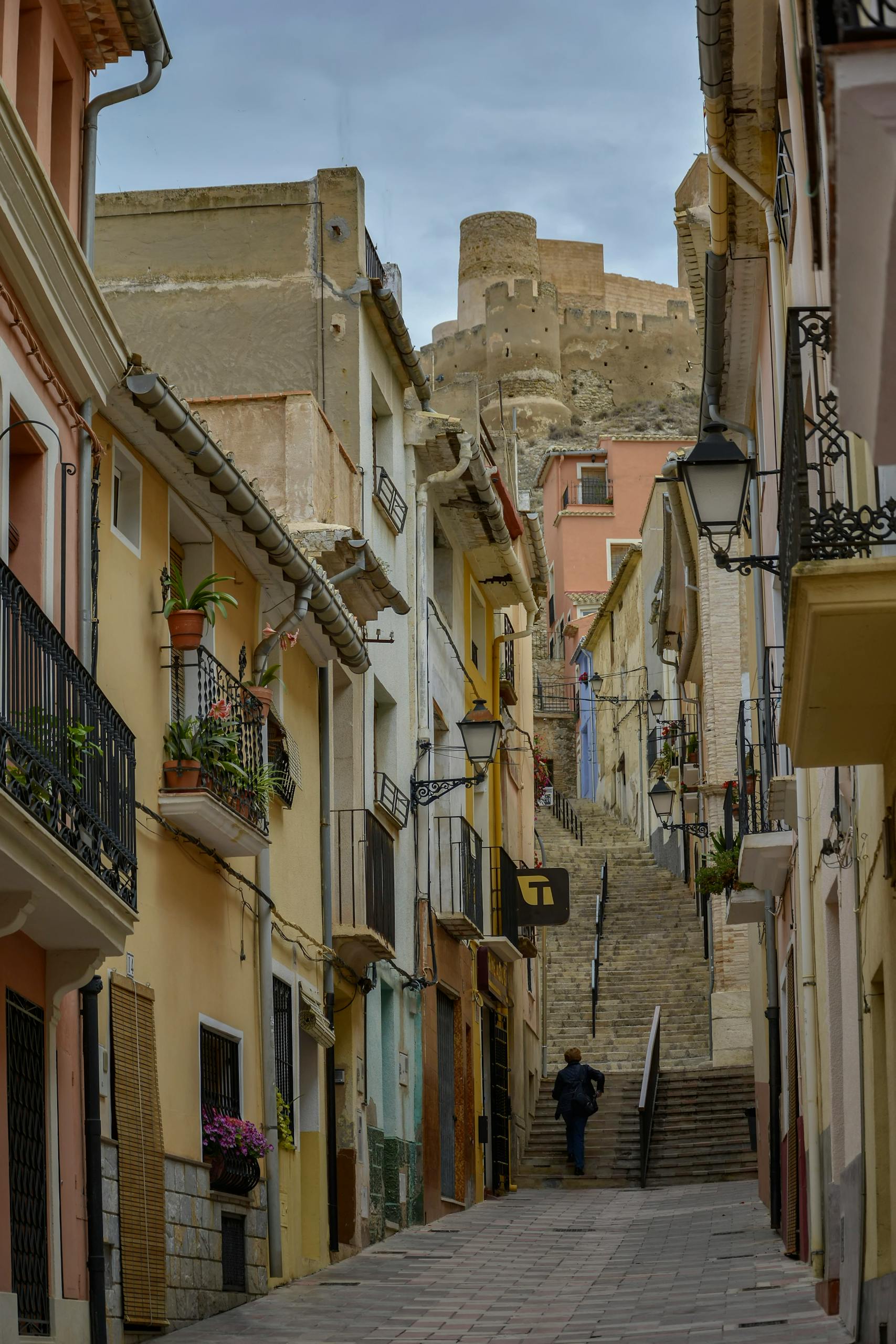
The old town is compact, with narrow stone streets, archways, and traditional façades. It retains a strong medieval layout, with minimal modern alteration in the historic core.
3. Discover quiet squares and residential streets
Unlike coastal towns, Biar’s historic centre remains primarily residential. Small squares and hidden corners reflect everyday life rather than tourism infrastructure.
4. Observe the town’s layered architecture
Biar’s construction follows the natural slope of the hill, creating a layered urban structure where streets rise gradually toward the castle.
Midday: Slow Inland Rhythm & Local Life
Traditional Inland Atmosphere
Biar operates as a working inland town rather than a tourism-focused destination. Daily life continues through its central streets, with local cafés, bakeries, and small shops serving residents.
This creates a more grounded atmosphere compared to coastal resort towns.
Dining in Biar
Local dining typically includes:
- traditional Alicante inland cuisine
- stews and seasonal dishes
- simple Mediterranean menus rooted in rural traditions
- locally sourced ingredients from surrounding valleys
Meals are unhurried and reflective of inland Spanish food culture.
Afternoon: Architectural Detail & Quiet Exploration
Stone Streets and Historic Texture
The old quarter is best explored slowly in the afternoon when light softens across the stone façades. The architecture is characterised by:
- sandstone and limestone structures
- medieval archways
- narrow pedestrian lanes
- small shaded plazas
This creates a highly atmospheric walking experience without crowds.
Why Biar Feels Different
Biar differs from coastal Costa Blanca towns because it has:
- no beach tourism influence
- minimal modern commercial development in the historic core
- a preserved medieval urban structure
- strong connection to inland agricultural history
This gives it a more northern European historic town feel despite its Mediterranean location.
Late Afternoon: Elevated Stillness
As the afternoon progresses, the town becomes quieter.
Light softens across the castle walls and surrounding hills, and the town’s elevation becomes more visually prominent. This is when Biar feels most atmospheric — structured, still, and elevated above the valley.
Sunset: Castle Silhouette Over Inland Alicante
Sunset in Biar is defined by elevation and silhouette.
The castle becomes a dark outline against the sky, while the surrounding mountains fade into layered tones of gold and blue. Unlike coastal sunsets, this is a land-based horizon experience.
The effect is quiet, expansive, and historically grounded.
Why Biar Is One of the Most Important Medieval Towns in Alicante
Biar stands out because it preserves one of the most intact medieval hilltop town structures in the inland Costa Blanca region.
It combines:
- a fully visible defensive castle system
- preserved medieval street layout
- strong agricultural valley context
- minimal tourism-driven alteration
It is frequently included in cultural and historical inland routes across Alicante province.
Where coastal towns are defined by leisure and commerce, Biar is defined by heritage and elevation.
Who Biar Is Best For
Biar is best suited to travellers who prioritise:
- medieval towns and historic architecture
- inland Costa Blanca exploration
- quiet, uncrowded destinations
- slow travel without fixed itineraries
It is less suited to beach-focused or high-energy tourism.
Related Reading
- The Ultimate Pre-Travel Wellness Routine
- How to Eat, Drink and Travel Without Burning Out
- The Modern Guide to Feeling Good While Travelling
- Guadalest: A Mountain Village Itinerary in Alicante
- Jalon Valley: Wine Country Slow Travel Guide
- Moraira: A Quiet Coastal Town in Costa Blanca
- Jávea Old Town: Historic Centre Guide
FAQs
What is Biar known for?
Biar is known for its medieval castle, historic old town, elevated position, and preserved inland architecture in Alicante province.
Is Biar worth visiting in Costa Blanca?
Yes. Biar is one of the most authentic medieval towns in inland Alicante, offering a quiet alternative to coastal tourist destinations.
What can you do in Biar?
Visitors can explore the castle, walk the old town, visit viewpoints, and experience traditional inland Spanish town life.
How long do you need in Biar?
Most visitors spend 2–4 hours in Biar, making it suitable for a half-day inland excursion.
Is Biar easy to walk around?
Yes, but it is built on a slope, so expect some elevation. The historic centre is compact and walkable.
When is the best time to visit Biar?
Spring and autumn offer the best temperatures, while early morning or late afternoon is ideal in summer.
How does Biar compare to coastal Costa Blanca towns?
Biar is quieter, more historic, and inland-focused, with a medieval structure and no beach tourism influence.